






In the world of digital dentistry, one of the most common questions professionals ask is:
Should you choose dry milling or wet milling?
Both methods are designed to produce highly accurate restorations, yet the difference lies in how they handle materials — and how each fits into your daily workflow. Let's take a closer look.
What Is Dry Milling?
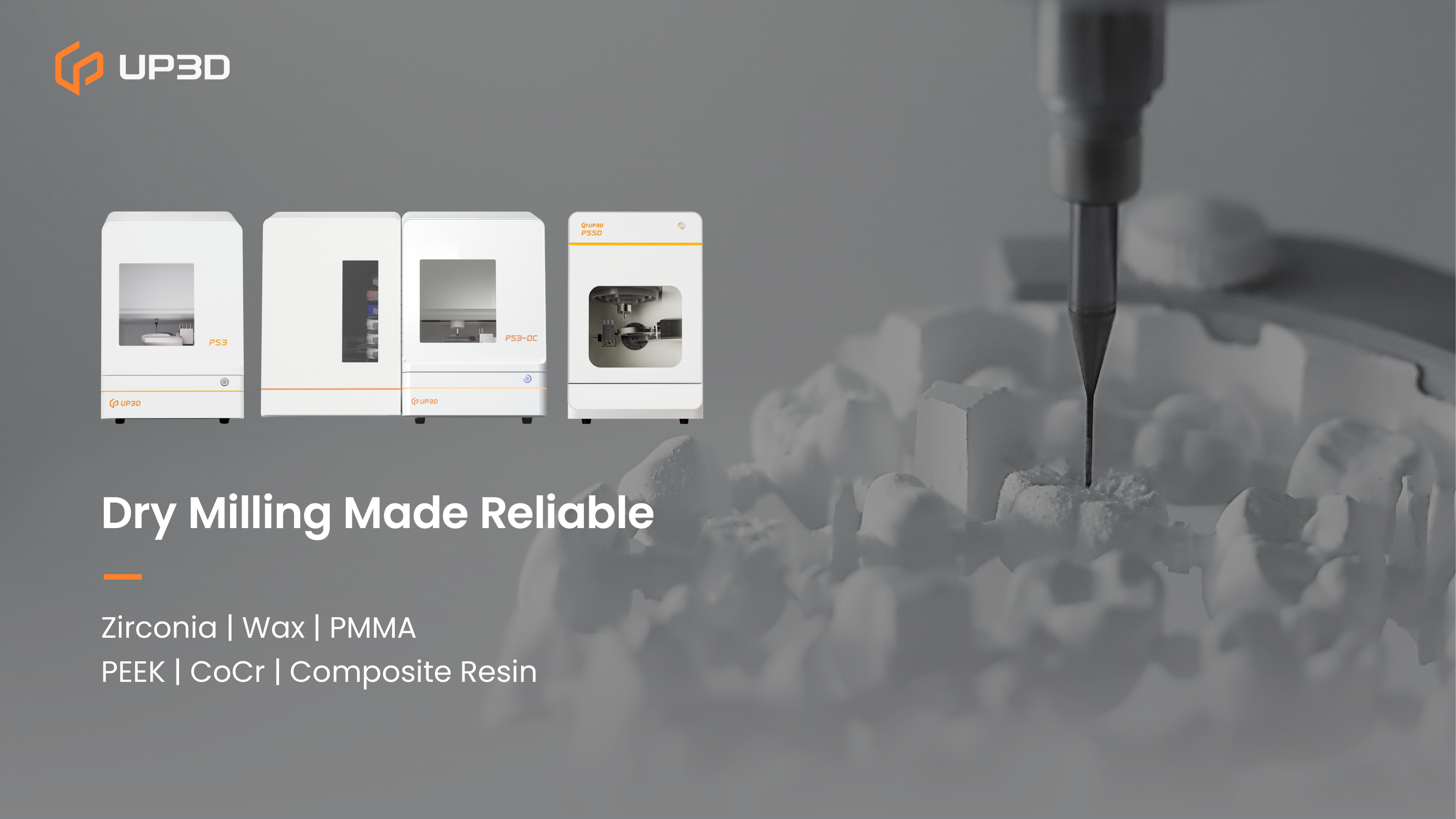
Dry milling is the process of cutting materials without using water or any liquid coolant. Instead, compressed air or internal air flow clears away debris during the milling process.
It's mainly used for materials that don't need liquid cooling, including zirconia, PMMA, wax, and PEEK.
Dry milling is fast, clean, and low-maintenance. There's no need to handle water tanks or filters, which makes it especially convenient for labs handling high zirconia volumes. The process is also ideal for pre-sintered zirconia restorations, where surface moisture could interfere with the sintering stage.
Modern machines like UP3D's P55D take dry milling even further — they're completely compressor-free, reducing installation complexity while maintaining excellent accuracy and performance.

What Is Wet Milling?
Wet milling uses a constant flow of water or coolant during the cutting process. The liquid keeps the material cool, prevents overheating, and improves surface quality.
This method is essential for materials such as glass ceramics, hybrid ceramics, and composite resins, which could crack or deform under heat generated during dry milling.
Wet milling delivers smoother surfaces, extends tool life, and allows for highly detailed, esthetic restorations. It's the go-to choice for clinics that frequently handle glass-ceramic crowns, veneers, and other esthetic materials.
The Main Differences Between Dry and Wet Milling
The most important distinction lies in the cooling method and the materials each process supports.
Dry milling relies on air and is ideal for zirconia and resin-based materials. It's faster, simpler, and better suited for heavy production environments.
Wet milling, on the other hand, uses water or coolant to achieve smoother results and protect delicate materials. It's slower than dry milling but produces finer surface quality, making it perfect for esthetic restorations that require a flawless finish.
In short:
-
Choose dry milling for zirconia, wax, and PMMA when efficiency matters most.
-
Choose wet milling for glass ceramics and composites when surface detail and esthetics are key.
Some advanced systems, like UP3D's IRON CORE i5 PRO, combine both dry and wet milling functions, offering complete flexibility for labs that work with diverse materials.
The Future of Dental Milling
With innovations in software, automation, and intelligent toolpath optimization, the difference between wet and dry systems is becoming less restrictive.
New technologies — including AI-assisted CAM strategies and smart control systems like UP3D's UPCAM & MillMind — are helping dental professionals achieve cleaner, faster, and more predictable results regardless of the material.
Instead of choosing one over the other, the future is about adaptability — systems that can switch seamlessly between dry and wet modes to match your workflow.
Final Thoughts
Understanding the difference between dry and wet milling helps clinics and labs make smarter investment decisions. Each method has unique advantages, and the best choice depends on your production needs, materials, and restoration types.
With innovations like compressor-free milling, hybrid systems, and intelligent CAM integration, UP3D continues to simplify digital manufacturing — helping dental professionals worldwide mill smarter, cleaner, and more efficiently than ever before.


