







Chipping is one of the most common and frustrating issues in zirconia milling. It affects margins, internal fit, and surface quality, often leading to remakes, extra polishing, or even discarded restorations. While zirconia itself is a strong material, it is also brittle in its pre-sintered state, making it sensitive to milling conditions.
Reducing chipping is not about changing one setting. It requires a combined understanding of milling parameters, bur selection, machine condition, and sintering behavior. This article explains where zirconia chipping comes from and how to systematically reduce it in daily production.
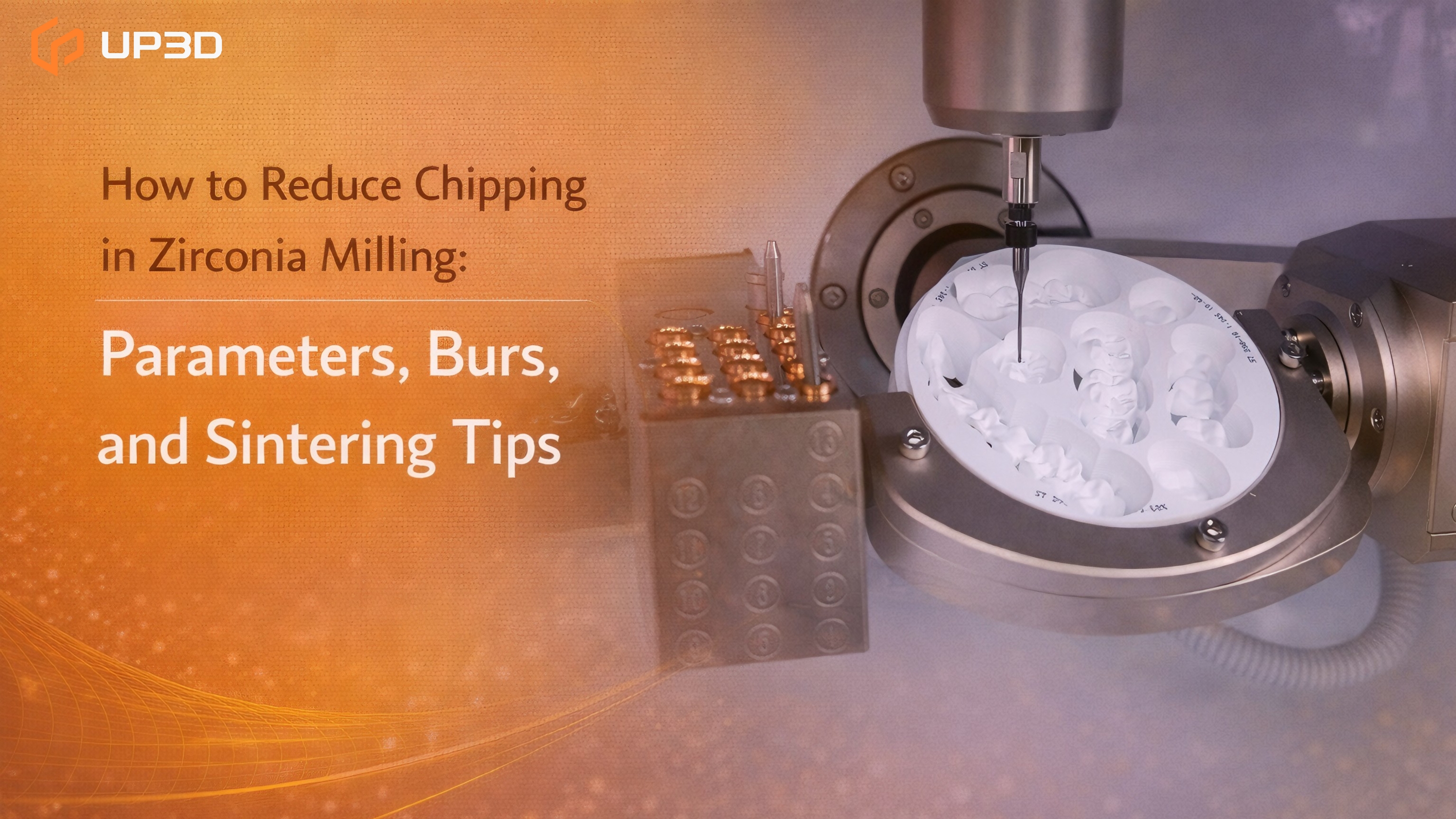
Why Zirconia Chips During Milling
Pre-sintered zirconia is relatively soft but brittle. When cutting forces exceed what the material can absorb, micro-fractures form at edges and margins. These fractures may not always be visible before sintering but can worsen afterward.
Chipping usually occurs due to:
-
Excessive cutting forces
-
Incorrect milling strategies
-
Worn or inappropriate burs
-
Poor machine stability
-
Stress introduced during sintering
Understanding these factors is the first step toward consistent results.
Optimizing Milling Parameters to Reduce Stress
Milling parameters directly control how much force is applied to the zirconia blank.
Key considerations include:
-
Cutting speed that is too aggressive can tear material instead of cutting it cleanly
-
Feed rates that are too fast increase edge stress
-
Depth of cut that is too large concentrates force at margins
Slower, more controlled finishing passes are especially important around thin margins and connectors. Many chipping problems originate during rough milling stages that leave internal stress behind.
Stable parameter combinations produce smoother tool engagement and reduce micro-cracks before finishing.
Choosing the Right Burs for Zirconia
Bur condition is one of the most underestimated causes of chipping.
Common bur-related issues include:
-
Using worn burs beyond their recommended lifespan
-
Using coarse burs too close to the margin area
-
Skipping proper finishing passes
Coarse burs are necessary for material removal but should stay away from final margin definition. Fine and finishing burs should be responsible for shaping margins and delicate areas.
Regularly replacing burs based on actual cutting performance—not just time—helps maintain consistent surface quality and reduces sudden edge breakage.
Machine Stability and Axis Control Matter
Even with correct parameters and new burs, machine condition plays a critical role.
Chipping can increase when:
-
Axis movement is not smooth
-
Spindle bearings begin to wear
-
Machine vibration increases under load
Small mechanical instabilities amplify cutting forces at the tool–material interface. Regular maintenance, calibration, and cleaning help ensure that milling forces remain predictable and controlled.
A stable machine cuts zirconia cleanly rather than tearing it.
Toolpath Strategy Around Margins and Connectors
Margins and connectors are the most vulnerable areas.
To reduce chipping:
-
Avoid abrupt tool direction changes near margins
-
Use smoother, continuous toolpaths
-
Allow finishing passes to approach margins gradually
Sharp angle entries and exits often create localized stress points. Well-designed toolpaths distribute forces evenly and protect thin edges.
Handling Zirconia Before Sintering
Milled zirconia restorations are fragile before sintering.
Improper handling can cause:
-
Micro-chips at margins
-
Connector fractures
-
Distortion before firing
Use minimal force when removing restorations from the blank. Avoid twisting or bending. Even small cracks introduced at this stage can expand during sintering.
Sintering Tips That Prevent Post-Milling Chipping
Sintering does not cause chipping directly, but it can reveal hidden defects.
To reduce risk:
-
Follow material-specific sintering curves
-
Avoid overloading the furnace
-
Ensure even temperature distribution
Rapid heating or cooling can increase internal stress and worsen pre-existing micro-cracks. Consistent sintering parameters help stabilize restorations and preserve edge integrity.
Inspecting Zirconia Before and After Sintering
Visual inspection before sintering is critical.
Look for:
-
Rough or broken margins
-
Small chips near connectors
-
Surface tearing patterns
Catching defects early prevents wasted time and materials. After sintering, check margins again to ensure that no hidden damage expanded during firing.
Final Thoughts
Reducing chipping in zirconia milling is not about a single fix. It is the result of balanced parameters, appropriate bur usage, stable machine performance, careful handling, and controlled sintering.
When all these factors work together, zirconia restorations show cleaner margins, smoother surfaces, and fewer remakes. Over time, a systematic approach to chipping reduction improves both production efficiency and restoration quality.
Consistent zirconia milling is not accidental—it is engineered through process control and attention to detail.


