






In the field of manufacturing, milling and grinding are two well-known processes for shaping materials. Both involve removing material from a workpiece, but they do so in very different ways. While these techniques are widely applied in metal industries, they also play an important role in digital dentistry, where dental prosthetics must be both functional and aesthetic.

What Is Milling?
Milling is a subtractive process in which rotary cutting tools carve a material into the desired shape. In dentistry, this is carried out with CAD/CAM dental milling machines, which take a digital design and precisely mill it from a block or disc of restorative material.
-
How it works: the restoration design is imported into CAM software, and the milling machine uses burs of different sizes to remove material layer by layer.
-
Materials: zirconia, PMMA, wax, composite resin, and even metals such as titanium and cobalt-chrome.
-
Applications: crowns, bridges, implant abutments, and dentures.
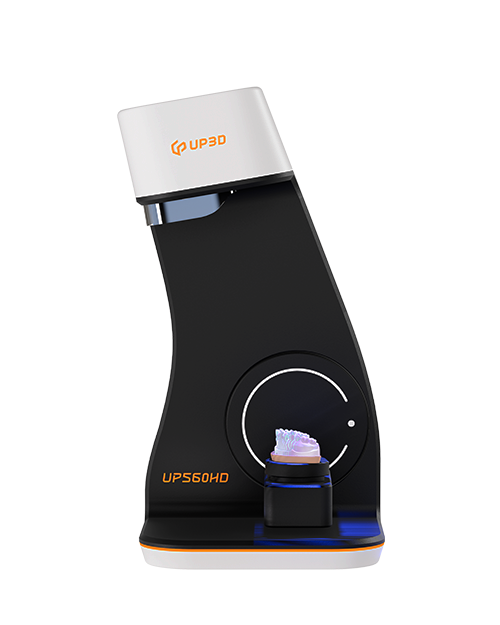
For example, UP3D’s P55D dry dental milling machines are designed to handle a wide range of these dental materials efficiently.
What Is Grinding?
Grinding uses an abrasive wheel or diamond-coated tool to remove or refine material. Instead of shaping the entire restoration, grinding is usually a finishing or adjustment step in dentistry.
-
How it works: abrasive particles on the wheel wear away the surface of the material.
-
Applications: fine adjustments to occlusion, polishing zirconia and ceramics, and refining details on milled restorations before sintering or glazing.
Key Differences
Milling and grinding differ in several important ways:
-
Purpose: milling shapes the full restoration, while grinding focuses on refining and polishing surfaces.
-
Tools used: milling relies on rotary burs and cutters, while grinding uses diamond wheels and abrasive discs.
-
Workflow stage: milling is the main fabrication step, grinding comes later as a finishing process.
-
Materials: milling can process zirconia, PMMA, wax, and metals; grinding is mainly applied to ceramics, zirconia, and glass ceramics for smoothness and detail.
Why the Distinction Matters in Dentistry
Milling and grinding complement each other rather than compete. Milling creates the structure—precise, functional, and ready to use. Grinding adds refinement—ensuring a smooth surface, natural aesthetics, and comfort for the patient.
Modern CAD/CAM workflows are designed so that milling machines complete most of the heavy work, while grinding steps are minimal. With advanced systems like UP3D’s dental milling machines, restorations often require little more than polishing before delivery, saving time and improving efficiency for labs and clinics.
Conclusion
Although milling and grinding both remove material, they serve different purposes in the dental workflow. Milling creates restorations with accuracy and consistency, while grinding perfects the details. Together, they ensure that crowns, bridges, and dentures meet both functional and aesthetic standards in digital dentistry.


